
Why I Don't Write Redemption Arcs
On the difference between comfort and honesty in fiction built on historical ground.


Why I Don’t Write Redemption Arcs
The question arrives like clockwork. Different names, different phrasing, but always the same hunger underneath it: Why doesn’t anyone get saved?
Sometimes it’s gentle. A reader who loved the atmosphere, the period detail, the slow horror of the thing, but wished the ending had offered something softer. Sometimes it’s blunt. Your stories are beautifully written but relentlessly cruel. Sometimes it isn’t a question at all, just a silence where the follow-up message should be. They finished the story. They needed it to turn. It didn’t.
I understand the need. I do. A redemption arc is one of the oldest contracts a story can offer: the promise that suffering has a destination. That the character who has done terrible things, or had terrible things done to them, will be transformed by the weight of it. Purified. Made whole. The reader endures the dark corridor because they trust the door at the end opens onto light.
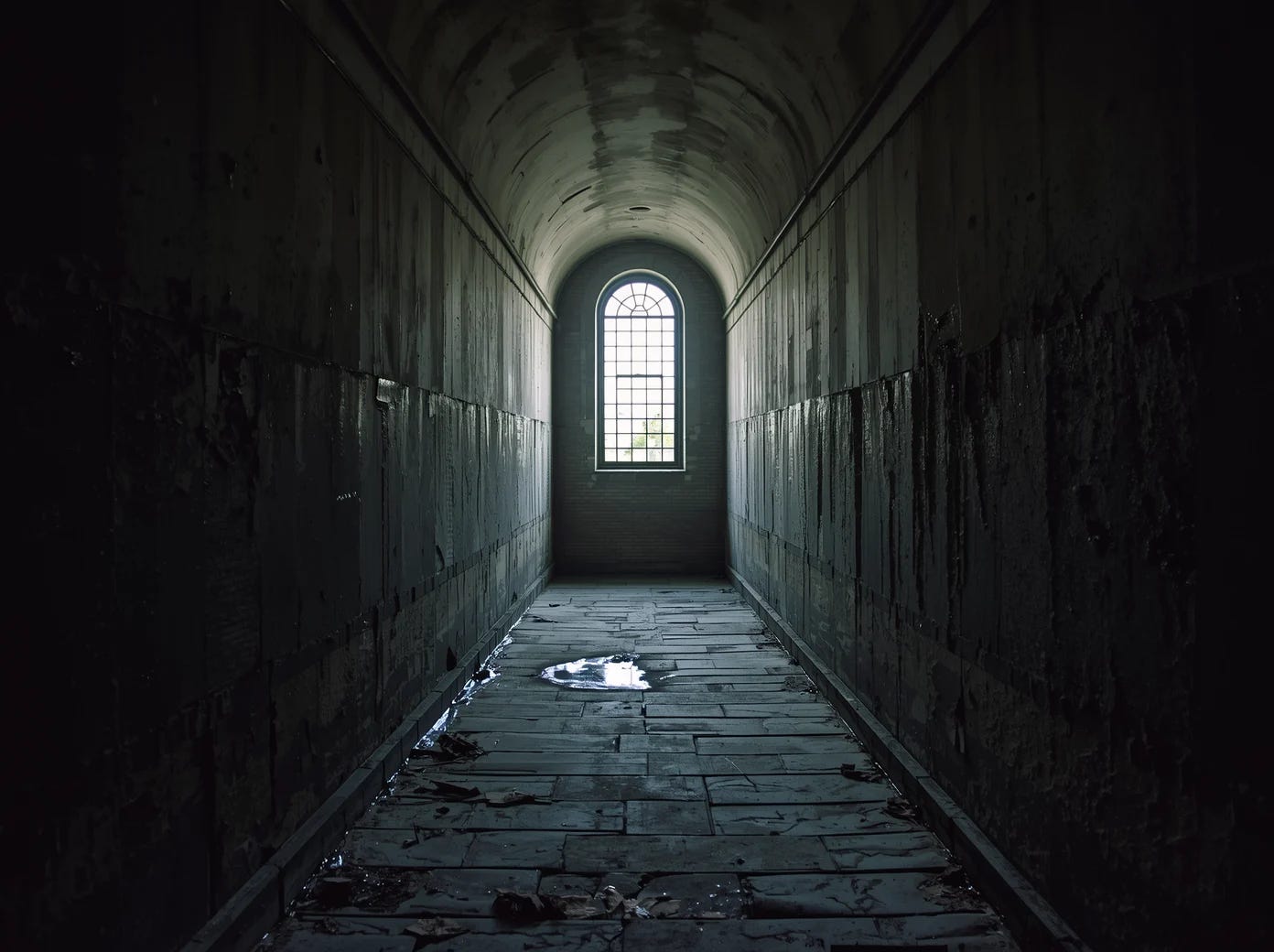
And I am asking you to walk the corridor with me knowing there is no door.
Not because I am cruel. Because the door is a lie.

Consider what a redemption arc requires. It requires the narrative to agree that suffering is a transaction. That pain, once it accumulates past a certain threshold, purchases something: absolution, peace, transformation. The character earns their redemption the way a laborer earns a wage. Put in the hours. Collect the reward.
This math does not survive contact with history.
The fiction I write lives in the spaces where real people were broken by systems larger than any individual character’s arc. Plantations. Asylums. Workhouses. Villages that burned while the century looked the other way. In these settings, redemption is not a narrative choice. It is a political one. To redeem a character inside a story built on historical atrocity is to impose a resolution the dead never received. It says: this suffering was a crucible, and something beautiful was forged inside it. It says that to the people who did not survive the crucible. It says it with a straight face.
I cannot write that sentence. I have tried, and it sits on the page like a counterfeit bill. Technically convincing. Fundamentally worthless.
There is a version of moral complexity that earns its weight, and there is a version that merely wears the costume. Redemption arcs, at their worst, belong to the second category. They offer the appearance of reckoning while performing the function of anesthesia. The reader feels the burn of the story’s darkest moments, and then the balm arrives: the villain repents, the survivor heals, the wound closes cleanly. The reader sets the book down feeling something. But the something is comfort, not understanding. And comfort is not what I am after.
What I am after is the moment when a character stands inside the full knowledge of what they have done, or what has been done to them, and the story refuses to metabolize it into meaning. The moment holds. It does not resolve. The reader sits inside it the way the character does: without the mercy of a verdict.
That is not cruelty. That is respect.
For the reader, who I trust to endure ambiguity. For the character, who I refuse to reduce to a lesson. For the historical ground the story was built on, which deserves more than to be repurposed as someone’s redemption fuel.

I will tell you the truth about one story. There is a chapter I drafted in which a man who had participated in something unconscionable finally breaks. Not performatively. Quietly. In a room by himself, with no audience and no language for what was happening inside him. And for six days I let the draft sit with an ending in which that breaking was the beginning of something. A turn. A slow, credible redemption that would have taken the rest of the novel to complete.
I believed it. The prose believed it. The character had earned it, if earning is the right word.
I cut it on the seventh day. Not because it was badly written. Because it was too well written. It was so convincing that it almost made me forget that the people his character was built from never got that moment. They didn’t break beautifully in a quiet room. They broke loudly, and publicly, and no one drafted a redemption arc for them.
The story that survived is harder. Less satisfying, in the way that word is usually meant. But it is honest, and I have learned to value honesty over satisfaction, even when the cost is a reader who finishes the last page and wishes I had been kinder.

I know what I am asking of you when you open one of my books. I am asking you to sit with someone who will not be saved, in a world that will not be corrected, and to find in that sitting something that matters anyway.
Not hope. Not catharsis.
Something older than both, and quieter: the recognition that a story can refuse to look away, and that the refusal itself is a kind of faith.
Not faith that things will improve. Faith that you can bear the truth of them.
That is why I don’t write redemption arcs. Not because I believe the world is irredeemable. Because I believe you deserve a story that doesn’t flinch.
The "counterfeit bill" image stayed with me. What you describe is the whole economy of consolation Catholic fiction has worked inside for centuries: purgatory as waiting room, suffering converted to credit. Refusing the redemption arc refuses that ledger. The seventh-day cut is the right confession to publish.
I definitely love 'Real' endings, which carved out their place in literature in historical works such as Candid, and the unfinished 120 Days of Sodom. For the reader sometimes they 'need' a catharsis in the form of a 'happy ending' because a real literary experience can make you physically ill from the experience.
I find 'real' endings less controversial today, because one of the most popular kind of fiction today - and granted it is mostly in the 'Pulp' sphere - is grimdark fiction. Warhammer is the most well known example where happy endings are very rare, and the only 'happy' part is the mostly vain hope of the Emperor coming back and smashing everything.
There is also Lovecraftian Cosmic Horror, which I think basically never had anything we'd call a happy ending, even with the most stretched out definition of what that could even be.
I guess your 'problem' is that people really identify with your characters and the realism of it all, especially the settings which in some cases people can physically visit such as a planation or an asylum, whereas I don't think you can really visit any locations that Lovecraft described so you are still anchored firmly within a fantasy which can blunt some of the horror felt by the reader. So your readers actually have something to confront face on, without the benefit of Hope as a crutch or a shield.
I definitely enjoy the style, and the visceral reaction by your readers indicates they do too, even if they wish they had downed something for the nausea before hand.