
The Defixio: Chapter IV
A disease in the ground.


Chapter Navigation:
Chapter IV
The fort’s dead did not rest. They multiplied, by night, in the bodies that pressed against the cots and overflowed to the floor. By midnight, the sick were quiet, but not from healing—Zoilos had dosed the worst cases with poppy syrup, then secured the ward doors, two turns of the key for the ones with fever-madness. He recorded the last of the vital signs in his log and returned to the surgery alcove, where Barsamias was scraping the dried fat from a cautery blade, motion spare, gaze lowered.
The light came from a single lamp, its wick trimmed to nothing. The room’s heat had congealed into a skin over the day’s blood: the scent was gone from clinical to animal. Zoilos sat, wiping sweat from his neck, and observed the nurse’s methodical care. Not even a garrison’s worth of gore could teach this level of economy—either a habit from home, or from some previous life before medicine.
The flame gave the walls a color they did not have by daylight: a deep, wet amber that made the stone look soft, almost organic. The shadows of the instruments on the shelf shifted when the flame moved, so the room seemed to rearrange itself with each draft from the corridor. The smell had settled into layers. The top note was incense from Barsamias’s altar. Beneath it, rendered fat from the cautery. Beneath that, the iron residue of a day’s blood, gone cold in the cracks between the flagstones. The room was small enough that both men’s breathing changed the air.
On the shelf, a cone of incense burned beside the Atargatis figurine, smoke rising to the rafters. Zoilos had never permitted such things in Pergamon, but here he tolerated it; the flies were worse, and the men from the East needed their own explanations for suffering.
Barsamias finished with the blade, then placed it edge-up to dry, and only then addressed the room. “Your hands are shaking.”
Zoilos examined his right hand, palm-up. A tremor, slight but visible. “The child’s skull was smaller than expected,” he said.
Barsamias pinched off the incense and let it smolder. “The burial?”
“Intrawall. Under Block IV.”
Barsamias exhaled through his nose, a flat gesture. “Of course.”
He waited, but Zoilos did not elaborate. The nurse broke the silence, his words packed into the smallest envelope of air. “The Syrian archers, when they get quartered in Block IV, call it ‘al-ghurfa al-mayyita.’ The dead room.”
Zoilos looked up. “Did you tell them about the cavity?”
Barsamias shook his head. “They knew before the digging. It is said the walls ring different, at night. I thought it was the stone. But I have never been quartered there.”
Zoilos allowed the silence to grow. In Pergamon, this would have been the juncture for hypothesis, then counter-example, then a recitation of every parallel in On the Natural Faculties or Hippocrates. Here, the only data that mattered was whether the fever spread by touch or by voice.
Zoilos said, “You believe the room is cursed.”
Barsamias did not smile. “Not in the Latin sense. More in the way a field is ruined by bad planting. Something in the soil, after harvest. It poisons the next year’s crop, and the next.”
“A curse of the soil.” Zoilos rolled the phrase on his tongue, testing it for nutrition. “Not the air? Not the water?”
Barsamias shrugged. “The water is bad everywhere. But the fever starts in Block IV. Always. Even after they clean, after they fumigate.” He held up two fingers, then pressed them together. “Sometimes, a new officer will ask for it to be repainted. New lime, new plaster. Still, the fever returns.”
Zoilos said nothing for a long time. The pattern was there. He could not dismiss it.
“Would you have spoken of this to my predecessor?” Zoilos asked.
Barsamias looked at the wall, then back at the lamp. “The Jew did not care for such stories. He thought it was a joke, made by men with too much time. When he began to cough, he blamed the stone dust.”
“He died?”
“He left for the coast. Never wrote back.”
Zoilos pressed his thumb into his own palm, the ache reassuring. “Did you ever go into Block IV yourself?”
“Once. To fetch a patient. I stood at the door, but did not enter. Even now, I can recall the smell. Like a kiln, but not from fire. More like a pit that has never cooled.”
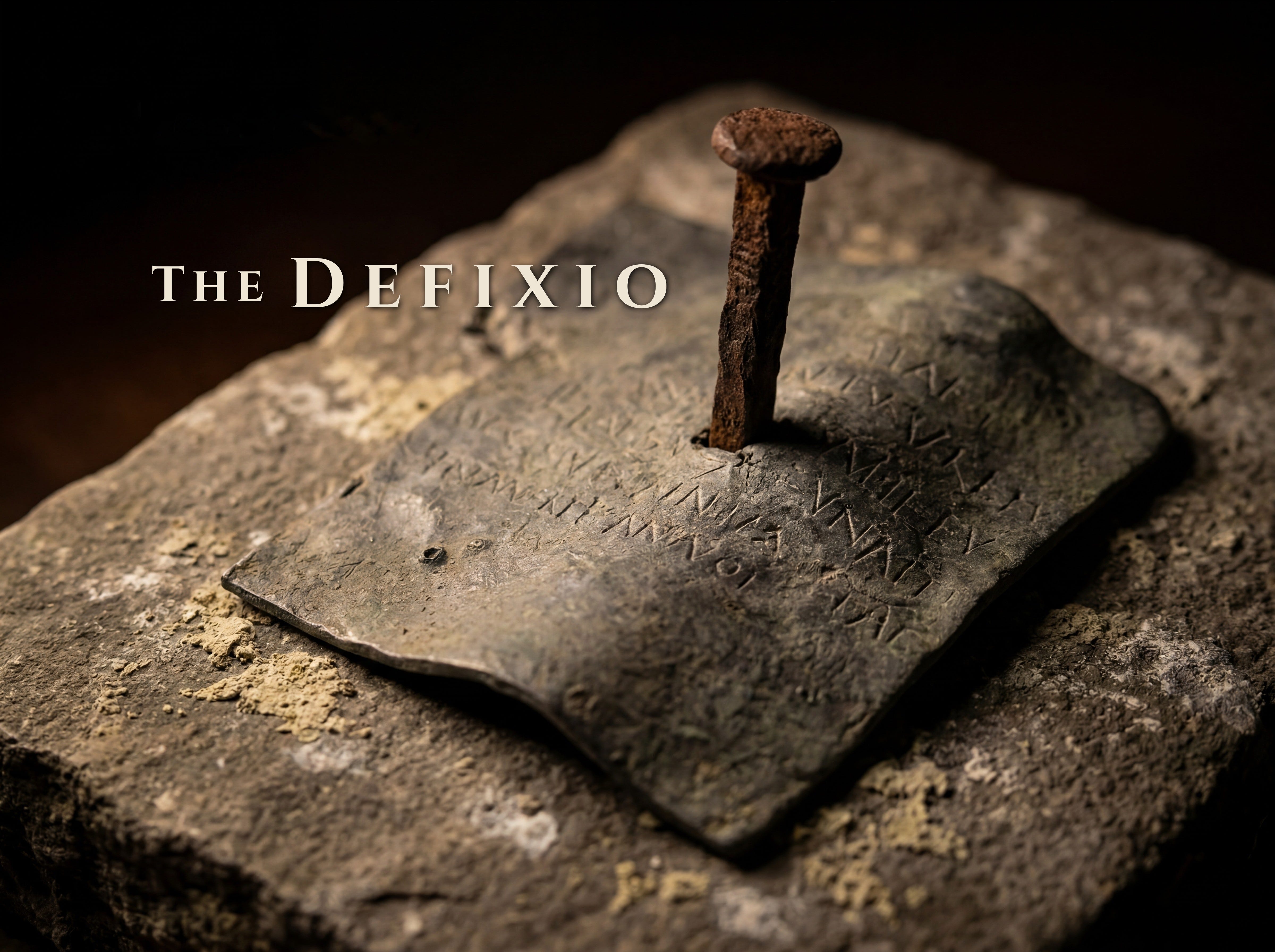
Zoilos said, “We unearthed a cylinder, with writing. Did you see the script?”
Barsamias nodded, his face gone stony. “It was not Arabic. Not Greek. Not the old cuneiform. It reminded me of the merchant seals from Palmyra, but…” He broke off, unwilling or unable to finish.
Zoilos drew the logbook closer, squared it with the table’s edge. “The prefect believes it is superstition. He wants the scroll burned, or catalogued, then lost.”
Barsamias’s shoulders rose, then dropped. “It will not change the fever. The disease is in the ground.”
Zoilos opened his hand. “You think it was the child, then.”
Barsamias hesitated, then offered a fragment of self: “In my country, when something is buried wrong, it calls to the living. The fever is only the voice. You can treat the sickness, but the call remains.”
“And you—do you believe it?”
Barsamias traced a finger through the ashes of the incense, the line perfect, a sign for no one but himself. “Does it matter what I believe?” He looked at Zoilos then, a glance that stripped both men of title or station. “What will you do with the remains?”
Zoilos watched the line form in the grey powder. The gesture was precise, unhurried, the kind of mark a man makes when he has forgotten he is being observed. The ash held the shape for a moment, then the draft from the corridor began to erase it. Neither of them moved to preserve it.
Zoilos saw, for a flicker, the ghost of his own grandfather—eyes gone brittle from too many gladiators bleeding out in the sun. He answered with the only honesty left to him: “I will document. I will record. The rest is for the living to argue about.”
Barsamias nodded, as if this answer was more than expected, then rose to fetch water for the night rounds. He moved with the certainty of someone who had already rehearsed this conversation in his head, perhaps more than once.
He paused at the door, lamp in hand. “If the fever returns to Block IV, I will tell you at once.” He paused with his hand on the frame. “One more thing, medicus. When you write your reports, write them for the prefect. Not for what walks the Wall at night. The prefect is the door you see. The arcani are the door you do not.” He did not elaborate. He left before Zoilos could ask.
Zoilos inclined his head, accepting the contract for what it was.
Barsamias left, and Zoilos was alone with the stink of resin and the slow seep of the night through warped glass. He rubbed his hands together, noticing the steadiness had returned, and waited for the sense of order to settle back into the world.
The lamp in Zoilos’s quarters was one of the old type, filled with animal fat gone yellow in the heat. He lit it with a splint from the surgery fire, watching the flame tunnel through a week’s worth of soot before it caught. The first breath of light showed every scratch on the table.
Zoilos unscrewed the top of his physician’s kit and drew out the glove from yesterday’s excavation. The leather was streaked with lime, but at the cuff, a clot of pale yellow caught the eye: a twist of fiber, flattened where sweat had dried it against the hide. He extracted it with the tip of a scalpel, turned it between his fingers, and pressed it to the side of the lamp. The fiber flared briefly—too clean, too oily for straw, too long for native grass.
Cedar, he thought, the resonance immediate. Not the broken, wind-burned kind that the Britons called “juniper,” but the warm, resinous strips that packed the amphorae of salted fish from Tarsus, or cradled the glass ointment bottles in the cargo holds of the merchant ships that plied the Aegean. In the north, cedar meant distance. Someone had paid to bring it here.
He ran the fiber under his nose. The scent was faint, but unmistakable—scent of medicine chests and funeral vaults. How it had arrived here, in a fort that could not manage fresh water, required a logic as foreign as the wood itself.
He folded the fiber in paper, then thumbed open his battered copy of Galen’s On the Natural Faculties. The book was dense, the script running in brown ink over sheep’s vellum so thin it nearly vanished in the light. Between the pages, Zoilos had already pressed two dozen specimens: a curling of bog moss, a mold that once rotted a patient’s tongue, a sliver of tooth lost in the granary brawl. Folded between every fifth page, in among the specimens, were slips of his own annotation, written in the cipher he kept for himself — observations he did not trust to the open log. Each flattened evidence, labeled in his own code, the only system he trusted.
He opened the book to the place he needed and smoothed the page flat with the heel of his hand. The vellum was cool and slightly oily, the way all well-handled medical texts become after years of use. He laid the cedar fiber across the margin, aligning it with the edge of the text block so it would not shift when the book closed. His fingers moved with the same precision he used to set a suture: the pressure even, the placement deliberate, the result intended to last.
He pressed the cedar fiber between the pages titled On the Causes of Peculiar Diseases. He noted the page and the date, then closed the book and tapped it against the table twice.
He heard the roll of boots in the corridor, then a hush. The fort after midnight was not silent, but layered: the moan of sick men, the pop of grain in the baker’s oven, the distant, dull bell that marked the hour.
Zoilos opened the shutters. The night air was warmer than the inside, but held nothing: not the sound of river, not the shriek of the birds that had once massed by the thousands this time of year. Even the wind was absent. Below the window, a torch burned at the north gate, the only light in a hundred paces.
He watched a pair of Batavians trudge by, heads bent, shoulders level. They did not speak. They took their ration bread from a pouch at the waist, ate, and kept walking. The entire fort ran on the logic of the body now: hunger, thirst, and the rituals that kept men from shitting themselves to death. The formalities of Rome were for the reports, not the living, he thought.
He closed the shutters, then went to the shelf where the water amphora stood. The surface inside was filmy, but no new layer of scum had formed since the day before. He drew a measure in a cup, held it to the light, then poured it out. Barsamias was right; the fever did not begin with the water, but the water gave it voice.
He marked the thought in his log, code-worded for his own use. The work helped; it made the next breath easier.
He lay back on the cot, boots still on, and watched the play of lamp and shadow on the ceiling. He counted the cracks, the angle of each, the likelihood that the roof would hold through the next rain, if rain ever came.
Beyond the Wall, the world rolled on without him, indifferent to every hypothesis.
He reached for On the Natural Faculties, pressed his thumb against the spine, and let the weight of it hold him to the earth. He did not sleep. Instead, he listened. The fort made its sounds. The book pressed its weight against his ribs, and he let it.